🥩 Seasoning Cast‑Iron with Tallow: Why It Works and What to Know
- dani77050
- Jun 22
- 2 min read
🔥 Why Tallow?
Tallow is rendered beef fat with a high smoke point (~400–420 °F), making it excellent for seasoning cast-iron. It creates a hard, slick, and durable layer when polymerized—meaning your pan becomes more nonstick and rust-resistant over time. Plus, it's what your great-grandma probably used.
❗ Should You Use Animal Fat?
Tallow is a time-honored choice for seasoning cast iron—especially for those who cook regularly. It builds a beautiful, natural finish that improves with every use. If your pan will be stored for a longer stretch, you can simply give it a fresh wipe before cooking or consider using coconut oil, avocado oil, or olive oil for that final coat—these stay stable a bit longer between uses. Real fats love real cooking, and your cast iron will thank you for it.
💡 Rule of thumb: Use tallow if your pan sees regular use. Otherwise, opt for a shelf-stable oil like coconut oil, avocado oil, or olive oil. Never toxic hexane-processed oils like vegetable oil, canola oil, etc.
We never recommend seed or “vegetable” oils like vegetable, canola, soybean, or corn oil—these are prone to oxidation and are often chemically processed.
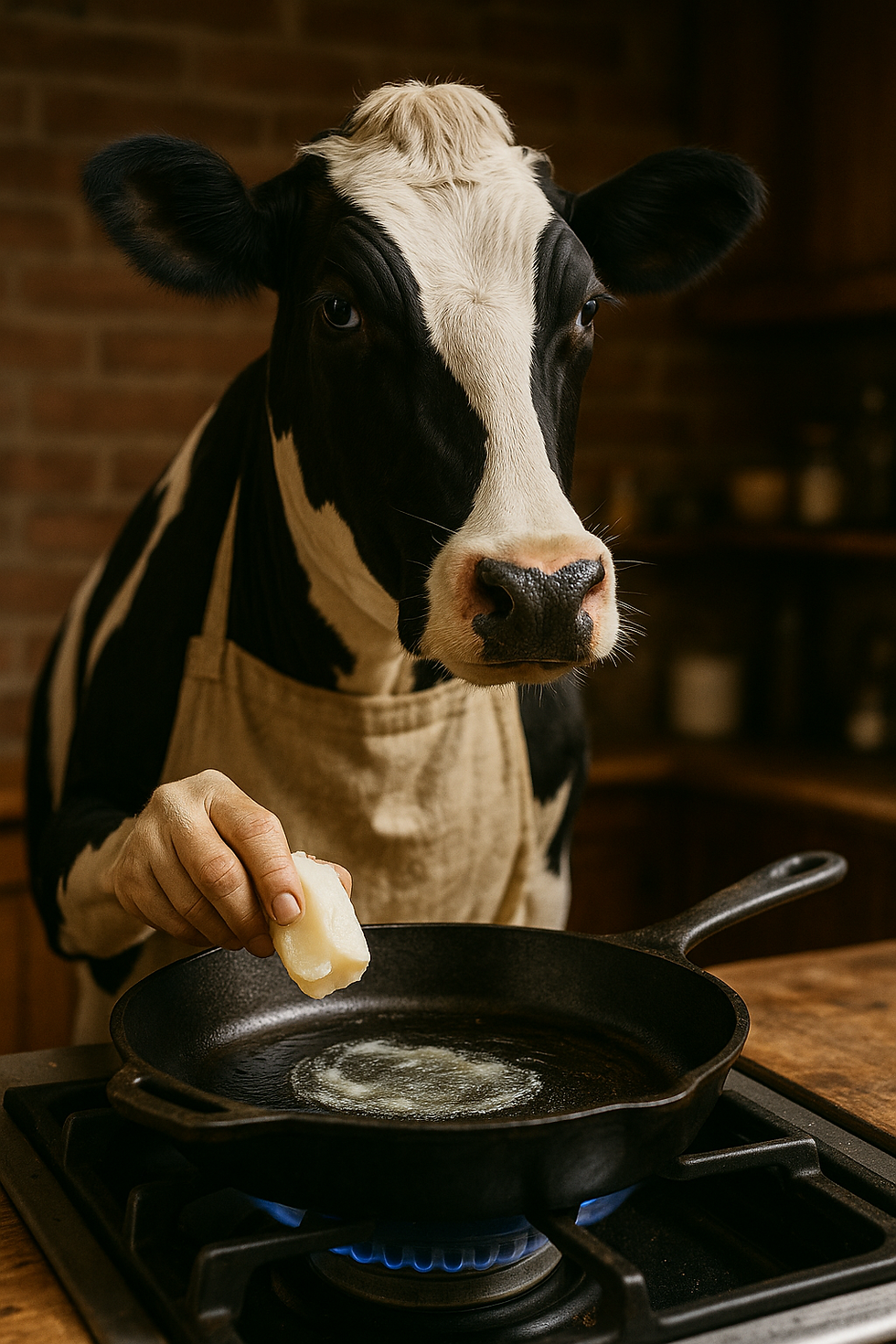
🧰 How to Season a Cast-Iron Pan with Tallow
Wash and dry your pan completely.
Preheat your oven to 500°F (or as high as it goes safely).
Rub a very thin layer of tallow all over the pan—inside and out.
Place the pan upside down on the middle rack (use foil or a sheet pan on the lower rack to catch drips).
Bake for 1 hour, then turn off the oven and let the pan cool inside.
Repeat this process 2–3 times for a strong base seasoning.
🧽 Daily Maintenance Tips
After cooking, wipe or rinse with hot water—no soap needed but can use salt and a little scrub for stuck on food.
Dry it well and apply a small amount of tallow or coconut oil before putting it away.
If you notice sticky spots or dull patches, simply re-season using the steps above or cook something fatty (like bacon) to refresh the layer.
✅ Final Thoughts
Tallow is traditional, natural, and effective for those who cook often.
For lower-maintenance seasoning, coconut oil, avocado oil, or olive oil are solid choices.
Skip seed oils entirely—they're unstable, overly processed, and not part of the Tin Roof Farm way.
🛠️ Want to See Our Favorite Cast Iron Tools?
We’ve put together a quick list of tried-and-true kitchen tools we love—including our go-to cast iron skillets and scrubbers that won’t ruin your seasoning.👉 Check out our Kitchen Favorites on Amazon
These are the same tools we trust in our farmhouse kitchen—affordable, durable, and cast iron–approved.
As an Amazon Associate, we earn from qualifying purchases—but only share what we actually use and love.
Comments